


News
Professor Edward Mansfield elected to the American Academy of Arts and Sciences in 2024
Congratulations to Prof. Ed Mansfield, Hum Rosen Professor of Political Science and Christopher H. Browne Center director, who is one of five Penn…
Read MoreTwo graduate students receive Andrea Mitchell Center Fellowship for A24-25
Miranda Sklaroff and Yara Damaj, graduate students in Political Science, have been awarded the Andrea Mitchell Center Fellowship for the 2024-2025…
Read MoreGraduate Student Awards and Fellowships
Congratulations to the 5 Ph.D. students who have received a Dissertation Research Award for 2024-2025: Apurva Bamezai, Jason Hartwig, Nick Pangakis,…
Read MoreDean's Scholar Award presented to Ph.D. student Rashi Sabherwal
Congratulations to Rashi Sabherwal who was named Dean's Scholar, one of nine given out to graduate students from across all of the departments of…
Read MorePh.D. Student Sarah Gerstein receives Margaret E. Galey Award
The Browne Center for International Relations has awarded Political Science Ph.D. student Sarah Gerstein the Margaret E. Galey Award for 2024. The…
Read MorePh.D. Student Daniel Shapiro receives prestigious Dean's Award for Distinguished Teaching
Congratulations to Political Science graduate student Daniel Shapiro for being awarded the prestigious teaching award. It was highly deserved!
Read MoreThree Political Science graduate students receive competitive DCF award
Congratulations to our graduate students Jason Hartwig, Audrey Jaquiss, and Chloe Ricks on being awarded the highly competitive Dissertation…
Read MoreDaniel M. Smith publishes research on legacies of wartime destruction
Professor Daniel M. Smith has published a new article in The Journal of Politics on the long-term socioeconomic legacies of the 1945 firebombing of…
Read MoreDaniel M. Smith contributes to new volume on Historical Political Economy (HPE)
Professor Daniel M. Smith has published a chapter in The Oxford Handbook of Historical Political Economy. Historical Political Economy (HPE) is the…
Read MoreNic Dias quoted in the New York Times!
Joint ASC-PSCI Ph.D. student Nic Dias had his work and thoughts quoted in the November 15th edition of the New York Times by Tom Edsall in an opinion…
Read More
Penn’s Political Science Department is experiencing a renaissance. Over the past decade, our faculty has grown by 50%, an increase in quantity that has been matched by gains in quality. The strength of our faculty in each of four major subfields is being built with an eye to excellence embracing a variety of approaches and methodologies.
Events
American Politics Workshop Series
Eric Schickler, UC Berkeley
Featured People

John DiIulio
Frederic Fox Leadership Professor of Politics, Religion, and Civil Society

John Lapinski
Robert A. Fox Leadership Professor of Political Science; Director, Penn Program on Opinion Research and Election Studies
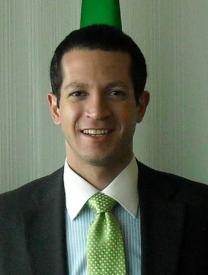
Michael C. Horowitz
Richard Perry Professor Director, Perry World House

Anne Norton
Stacey and Henry Jackson President’s Distinguished Professor

Brendan O'Leary
Lauder Professor of Political Science Honorary Member of the Royal Irish Academy, Honorary Professor of Political Science Queen's University Belfast



Books
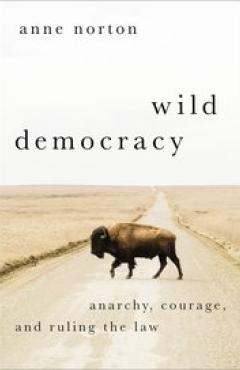
Wild Democracy: Anarchy, Courage, and Ruling the Law
This is a manifesto for a wilder democracy. This is an ethic for free, courageous and anarchic democrats. Courage is necessary because fear is the death of democracy.
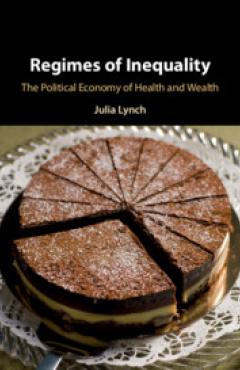
Regimes of Inequality: The Political Economy of Health and Wealth
Since the 1990s, mainstream political parties have failed to address the problem of growing inequality, resulting in political backlash and the transformation of European party systems.
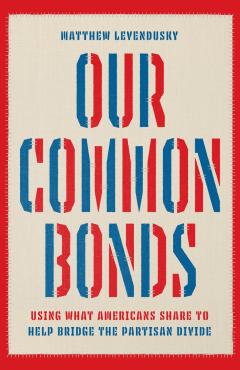
Our Common Bonds Using What Americans Share to Help Bridge the Partisan Divide
Our Common Bonds shows that—although there is no silver bullet that will eradicate partisan animosity—there are concrete interventions that can reduce
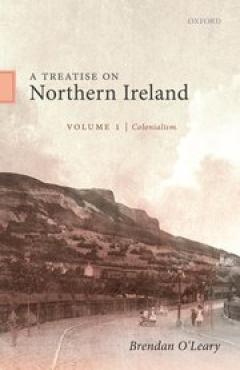
A Treatise on Northern Ireland, Volume I
The definitive account of the political history of Northern Ireland.
Making Sense of a United Ireland
“This is an important and superbly argued book, rich in detail, truth-telling but also hard-nosed.
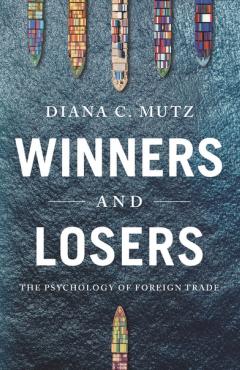
Winners and Losers: The Psychology of Foreign Trade
Winners and Losers challenges conventional wisdom about how American citizens ...